FOUNDER TESTIMONY

A heartbeat restarted.
A mission followed.

Lawrence Terry’s founder story is not a short biography attached to a brand. It is the origin of Restarting The Heart: sudden cardiac arrest, a five-day coma, traumatic recovery, faith, family, disability and access challenges, years of unexplained cardiac observations, and a decision to turn survival into useful work for other people.

Lawrence Terry did not set out to build an ecosystem around survival. Restarting The Heart grew from a life interrupted, people willing to act, faith carried through uncertainty, years of rebuilding, and a conviction that a second chance should become service.

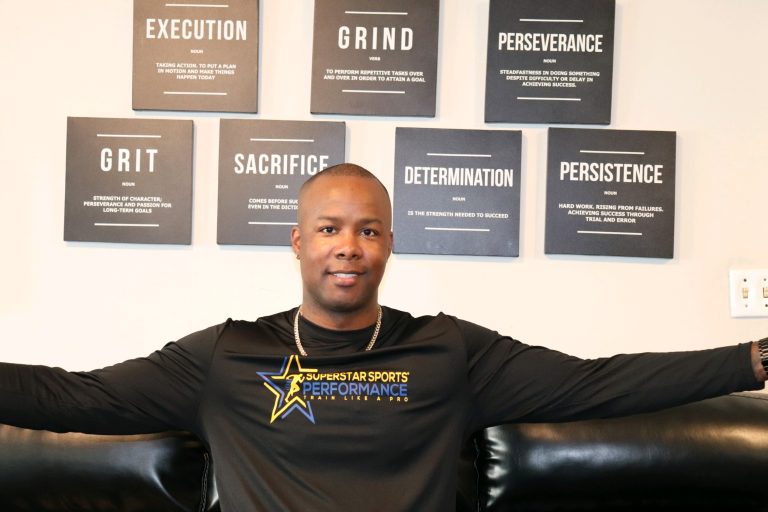
Lawrence Terry, founder of Restarting The Heart

BEFORE MAY 2, 2018

Coach. Builder. Father. A life already moving fast.

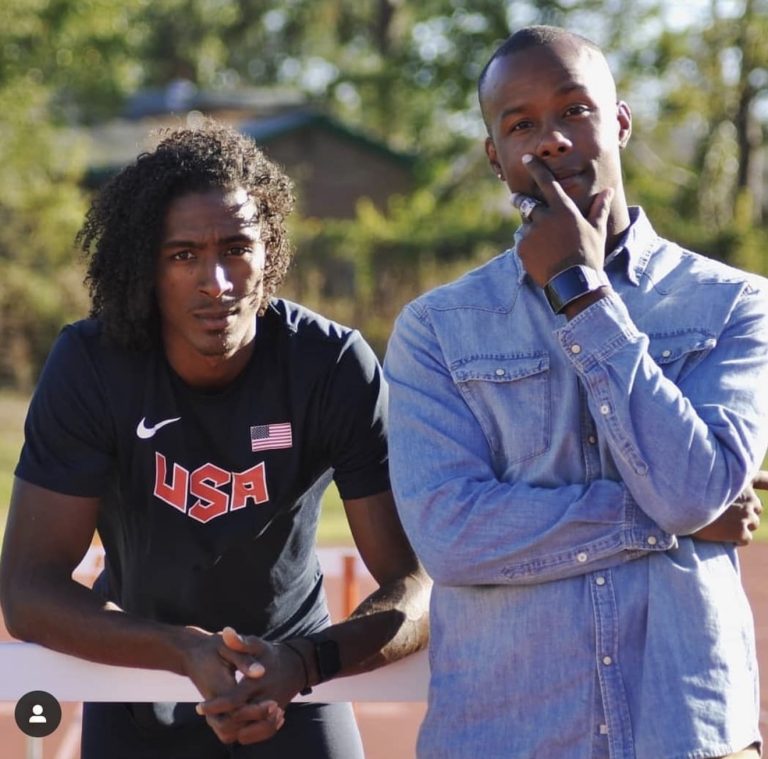
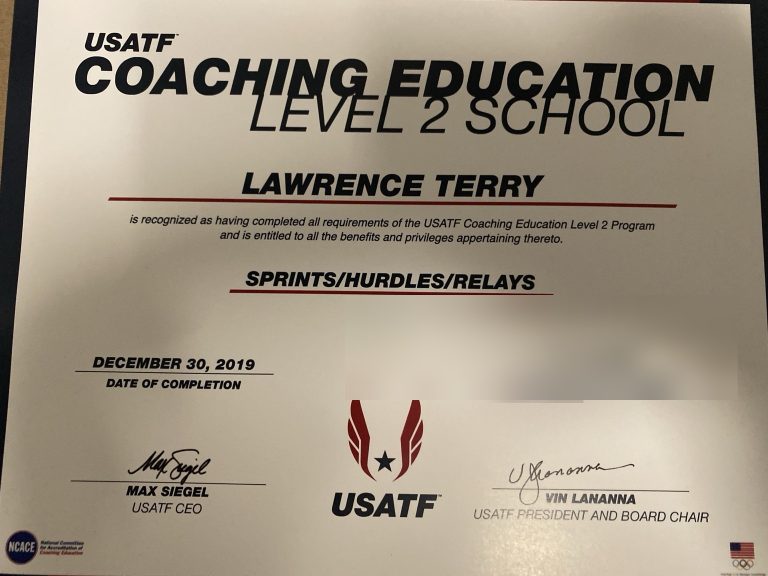
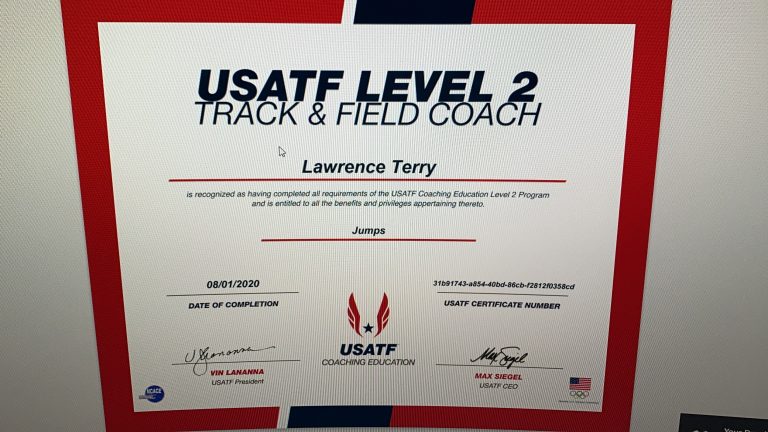
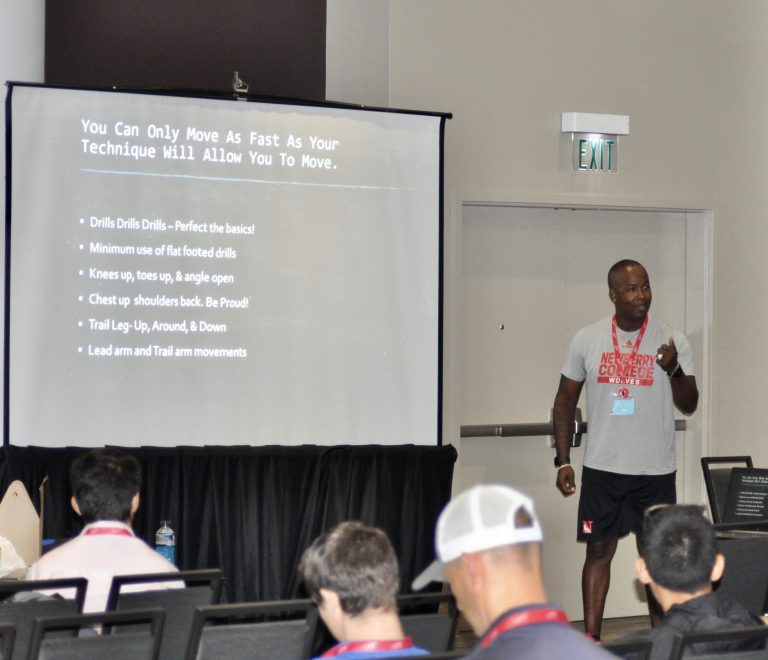
Before Restarting The Heart existed, Lawrence Terry had already spent years building in two worlds: technology and athletics. Coaching was never only about times, medals, or rankings. It was about development—preparation, discipline, accountability, adaptation, and helping people become more capable under pressure.

That perspective would later matter in ways he could not have anticipated.

MAY 2, 2018 · AGE 33

The day an ordinary routine became a sudden cardiac arrest.

Lawrence had worked, coached a routine track practice, returned home, and cut the grass. Later, while sitting outside at rest, he became lightheaded, felt chest pressure, and collapsed from an out-of-hospital ventricular-fibrillation sudden cardiac arrest.

A neighbor began CPR. Columbia Fire Department Engine 14 continued resuscitation and used defibrillation. Lawrence survived, but he remained in a coma for five days. His survivor account records that his ejection fraction fell below 15% during the acute event and that his family was warned that survival and neurological recovery were uncertain.

WHY THE STORY MATTERS

Survival was not a return to the old life.

Recovery involved physical rebuilding, cognitive and emotional changes, traumatic-brain-injury consequences, living with an implanted cardiac device, navigating relationships and support systems, and learning how much practical information survivors and families are expected to assemble on their own.

Survival was the beginning, not the ending.

Waking up did not return life to the way it had been. Recovery included physical rehabilitation, cognitive and emotional challenges, uncertainty, learning to live with cardiac technology, rebuilding confidence, navigating family and caregiver relationships, and confronting the reality that progress rarely moves in a straight line.

The experience also changed how Lawrence understood the word strength. Strength was no longer only pushing harder. It also meant accepting help, respecting recovery, learning what had changed, continuing when certainty was unavailable, and finding purpose that could survive circumstances.

WHAT HE BELIEVES · WHAT THE RECORD SAYS

The founder’s interpretation and the clinical record are related—but they are not the same claim.

Lawrence’s lived interpretation

In his survivor writing, Lawrence recalls thinking intensely about accumulated stress immediately before the 2018 collapse. Over subsequent years he repeatedly noticed that certain high-salience thoughts and unresolved concerns seemed to produce stronger physical and cardiac sensations than strenuous exercise did.

He believes cognitive-emotional stress may be an important part of his individual story. RTH presents that as founder testimony and a hypothesis—not as proof of what caused the 2018 arrest.

What remained unresolved

Later electrophysiology documentation continued to characterize the cardiac arrest as having uncertain etiology. That unresolved status matters: the founder’s questions emerged precisely because conventional evaluation did not provide him with one complete causal explanation.

What clinicians later observed

MUSC electrophysiology documentation later recorded a pattern in which tachycardia episodes were associated with stress and thinking rather than exertion. Later cardiology documentation also described a rapid change in cardiac function as potentially stress-related.

Those observations are clinically meaningful context, but they still do not establish that one mechanism explains every event or that the same pattern applies to other people.

Why RTH keeps a boundary

The founder story can generate questions. Clinical records can document observations. Peer-reviewed literature can establish what is already known. Prospective research is still required before stronger generalizable claims are justified. RTH intentionally keeps those evidence levels separate.

FAITH & PURPOSE

“I don’t have a story. I have a testimony.”

Lawrence’s published account places faith at the center of how he understands survival. He credits the people who acted, the medical response that followed, the family and church community who prayed and supported him, and God’s grace for the second chance he believes he received.

That belief became a practical responsibility: if survival gave him more time, he wanted that time to produce service, education, advocacy, preparedness, and resources other people could use.

The story is not simply that his heart restarted.

For Lawrence, the deeper testimony is that life remained when it could have ended—and that people, timing, faith, family, medicine, community, and grace became part of what happened next.

Restarting The Heart is built from that understanding of a second chance: gratitude is strongest when it becomes responsibility. Survival becomes meaningful when it is put to work for somebody else.

FROM SURVIVOR ACCOUNT TO NEUROCARDIAC QUESTION

Why he developed the Coach Terry Neurocardiac Model™.

Restarting The Heart, published July 5, 2025, is primarily a survivor guide: sudden cardiac arrest, physical recovery, brain injury, mental health, support networks, advocacy, preparedness, and rebuilding life. The later Neurocardiac work addresses a different question: what might be happening upstream when cognitive-emotional processing appears to coincide with measurable autonomic and cardiac changes?

The Coach Terry Neurocardiac Model™ organizes that question into a five-stage cascade: Trigger → Central Processing → Autonomic Dysregulation → Neurohormonal Response → Cardiac Expression. It is an evidence-informed, hypothesis-generating framework. It is not a diagnosis, treatment protocol, or claim that thought alone caused Lawrence’s arrest.

THE CORE RESEARCH QUESTION

What if the heart is sometimes the downstream expression of a process that begins earlier?

That question links the founder’s lived observations to established research in stress physiology, autonomic regulation, neurocardiology, mental-stress cardiac responses, and recovery. RTH’s research work exists to test and refine the question—not to assume the answer.

WHY ONE EXPERIENCE BECAME AN ECOSYSTEM

Each RTH property solves a different problem Lawrence encountered while surviving, rebuilding, and trying to understand what happened.

Survivor education & publishing

Tell the story. Restarting The Heart, published July 5, 2025, records the origin story and practical survivor lessons that came from the years after cardiac arrest.

The published book and growing resource library translate recovery experience into practical information for survivors, families, caregivers, coaches, schools, and communities.

Disability access & advocacy

Build practical resources. Survivor, family, disability-access, preparedness, recovery, coaching, and educational materials turn lived experience into tools other people can actually use.

Brain injury, cardiac disability, communication barriers, accommodation problems, and difficult public systems made access and disability-rights education part of the mission rather than a separate issue.

Children & preparedness

Teach the next generation. The Heart Hero Chronicles and educator curriculum bring heart safety, preparedness, resilience, service, and age-appropriate learning into stories children can understand with adult guidance.

The Heart Hero Chronicles, Activity Companions, and educator curriculum make heart safety, preparedness, empathy, resilience, service, and disability awareness understandable to children with adult guidance.

Superstar Standard™

Create a standard for pressure. The Superstar Standard™ translates lessons about self-leadership, pressure, purpose, resilience, recovery, service, transformation, adaptability, and responsibility into a nine-pillar developmental framework.

Years of coaching and recovery became a nine-pillar developmental philosophy for self-leadership, pressure, purpose, emotional resilience, recovery, service, transformation, adaptability, and responsibility.

Research & the Neurocardiac Model™

Ask better research questions. The Neurocardiac Model™ organizes a research question born from experience while keeping the boundary clear: one person’s story can generate hypotheses, but it does not establish general medical causation.

Unresolved etiology, repeated stress-sensitive observations, later device data, and medical literature became a structured research question that can be inspected, challenged, and independently tested.

SuperstarIQ

Build responsibly. SuperstarIQ extends the ecosystem into evidence organization and longitudinal context while remaining explicit about development status, uncertainty, provenance, and the limits of technology.

The difficulty of organizing years of fragmented symptoms, wearable data, device records, notes, chronology, uncertainty, and evidence led to a technology concept focused on longitudinal organization and better communication—not automated diagnosis.


STORY ≠ CLINICAL PROOF

The testimony is powerful enough without overstating what it proves.

Lawrence’s medical history, recovery, later observations, wearable/device records, and lived experience inform the questions RTH asks. Public RTH materials distinguish personal narrative, documented events, research hypotheses, peer-reviewed evidence, and validated clinical standards. The founder story is testimony and case context—not a diagnosis for anyone else.

TESTIMONY · DOCUMENTATION · RESEARCH

Consistency means telling the complete story without claiming more than the evidence supports.

The published survivor account explains what Lawrence experienced. Clinical documentation records what clinicians observed and what remained uncertain. The Neurocardiac Model™ structures a research hypothesis. RTH’s public evidence approach keeps those layers connected and distinguishable.

THE WORK CONTINUES

Restarting the heart was an event.
Restarting a life became the work.

The RTH ecosystem exists because a survivor chose not to treat survival as the finish line. Its purpose is to turn lessons from adversity into education, preparedness, access, service, responsible research questions, better tools, and opportunities for other people to keep moving forward.

Restarting The Heart exists because one survivor’s recovery exposed multiple gaps—information, preparedness, access, education, research translation, and data organization. The ecosystem is the response to those gaps.