Forthcoming
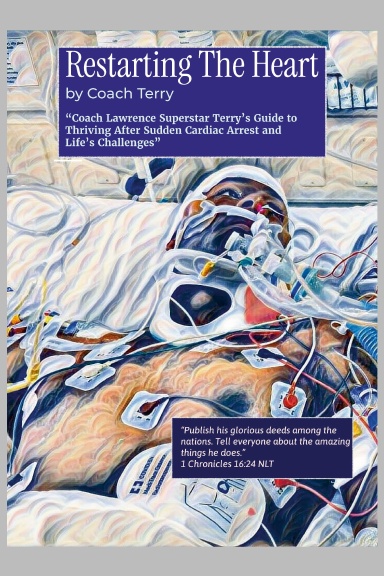
Thriving Beyond Survival™
A practical survivor-and-caregiver workbook about rebuilding identity, navigating emotional triggers and uncertainty, strengthening support systems, and creating a life that is larger than the crisis that changed it.
Survivors, caregivers, families
Planned educator / facilitator use
Guided reflection on identity and triggers, a support-network exercise, and a personal next-step plan. Facilitate without requiring disclosure of trauma or health information.
Forthcoming
Disability Rights in Action
A plain-language disability-rights guide for individuals, families, educators, businesses, healthcare providers, law enforcement, and public institutions covering access, accommodation, documentation, enforcement, and inclusion. Educational legal information—not individualized legal advice.
Disabled people, families, educators, organizations
Planned educator / facilitator use
Access-barrier scenarios, respectful accommodation-request practice, and a documentation exercise. Verify the law for the relevant setting and jurisdiction.
Forthcoming
AASOM — America’s ADA Standard Operations Manual
An operational reference translating disability-access principles into practical procedures, staff expectations, documentation practices, escalation pathways, grievance handling, and accessibility-centered service delivery.
Organizations, administrators, compliance teams
Planned educator / facilitator use
Staff case studies, an accessibility walkthrough, escalation-role practice, and a procedure-review checklist. Intended for organizational learning, not a compliance guarantee.
Forthcoming
CIT Training Manual
A structured crisis-intervention training resource focused on communication, de-escalation, disability awareness, behavioral-health encounters, practical response, documentation, and safer interaction across public-facing systems.
Law enforcement, public safety, community partners
Planned educator / facilitator use
Scenario discussion, communication and de-escalation practice, disability-awareness reflection, and response debriefs. Use with qualified facilitators and current agency procedures.
Forthcoming
The Neurocardiac Effect
An accessible exploration of the questions that led to the Neurocardiac Model™—how meaningful inputs, central processing, autonomic dysregulation, neurohormonal processes, recovery capacity, and cardiac expression may interact. It presents an evidence-informed framework, not a diagnostic or treatment standard.
Survivors, researchers, clinicians, informed general readers
Planned educator / facilitator use
Brain-autonomic-cardiac vocabulary, mapping a proposed pathway, comparing evidence types, and distinguishing a hypothesis from a clinical conclusion.
Forthcoming
Understanding Emotional Activation
A practical guide to recognizing triggers, escalation, body and attention changes, total load, recovery needs, and regulation strategies without reducing complex experiences to a single score or diagnosis.
Survivors, families, coaches, educators, caregivers
Planned educator / facilitator use
Trigger and total-load mapping, noticing changes in attention and the body, communication practice, and optional regulation exercises with accessible alternatives.
Forthcoming
ADA Court Accommodations for Disabled Pro Se Litigants in South Carolina
A South Carolina-focused legal reference explaining court-access concepts, accommodation requests, documentation, procedural barriers, and key disability-rights authorities for self-represented litigants. Educational legal information only; law and procedures require current verification.
Disabled self-represented litigants and advocates
Planned educator / facilitator use
Court-access scenarios, drafting a clear accommodation request, organizing records, and checking current South Carolina court procedures. Not individualized legal representation.
Forthcoming
Tomorrow Needs You
A hope- and purpose-centered RTH publication about staying connected to possibility during seasons of crisis, loss, exhaustion, or uncertainty—and about the people, relationships, faith, support, and future moments that can make another tomorrow worth reaching.
Individuals, families, mentors, communities
Planned educator / facilitator use
Purpose and belonging discussion, a trusted-support map, reflective writing, and a small service project. Participation should be voluntary; allow private or nonverbal responses.
Forthcoming
Neurocardiac Regulation & Recovery Workbook
A guided workbook for organizing observations about activation, chronology, recovery, routines, communication, and patterns that a reader may want to discuss with qualified professionals. It is an educational tracking tool, not a clinical monitor.
Survivors, caregivers, coaches, informed adult readers
Planned educator / facilitator use
Chronology mapping, recovery reflection, support planning, and separating observation from interpretation or diagnosis.
Forthcoming
Trigger Mapping Workbook
A structured workbook for identifying meaningful inputs, context, timing, total load, downstream changes, and recovery needs without treating a trigger map as proof of medical causation.
Survivors, coaches, facilitators, adult learners
Planned educator / facilitator use
Input/context mapping, timeline building, pattern comparison, and communicating uncertainty responsibly.
Forthcoming
Neurocardiac Planner
A daily planning and reflection tool designed to organize routines, appointments, priorities, recovery periods, observations, and questions for follow-up without functioning as emergency or medical monitoring.
Survivors, caregivers, busy adults, structured-planning users
Planned educator / facilitator use
Daily planning, pacing, reflection, question capture, and review of routines that support sustainable participation.
Forthcoming
Guided Regulation Journal
A guided journal for reflective practice around attention, activation, recovery, communication, and what helps a person regain a workable state. It does not substitute for therapy or individualized care.
Adults, survivors, caregivers, facilitated groups
Planned educator / facilitator use
Optional journaling prompts, regulation-practice reflection, communication planning, and non-disclosure alternatives.
Forthcoming
Recovery Capacity Resilience Framework
A practitioner-oriented reference for thinking about accumulated load, available recovery resources, pacing, resilience, and the conditions that support sustained functioning. It remains educational and framework-based rather than diagnostic.
Coaches, educators, facilitators, practitioners
Planned educator / facilitator use
Case-based discussion of load and recovery, capacity planning, boundaries, and distinguishing educational frameworks from clinical assessment.